

Brotherhood
Our Lady Virgin of Sorrows
Foundation and History
It was founded on March 29, 1955 by Mr. Manuel Hurtado y García.
And as for its origin, there is evidence that it has existed since the 18th century.
BANNER
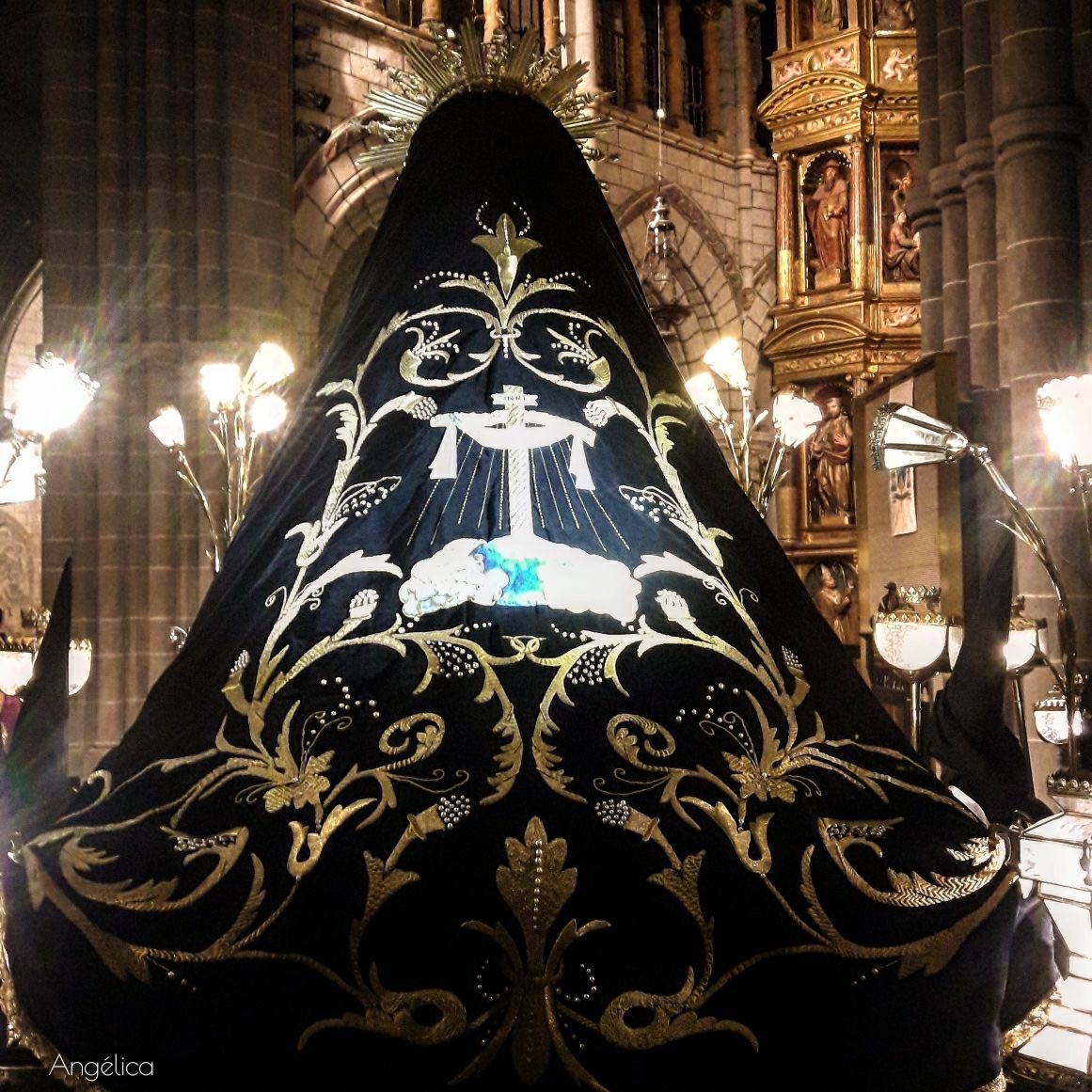
It is made of black velvet, gold and silk. It was embroidered and painted by the Conceptionist nuns of Tarazona in 1961. After the procession it is placed in a glass display case in the Chapel of the Virgin.
CANONICAL SEAT
Church of San Vicente, Martyr. Doz de Tarazona Home. This church remains closed throughout the year, opening exclusively to celebrate worship in honor of the Most Holy Virgin of Sorrows.

PENITENTIAL ROBES
The brotherhood's habit, according to the statutes, can be: The children who carry the Standard and the Seven Sorrows, wear a black tunic, with or without a hood, a white monogram of the Brotherhood, white gloves and laces and black shoes. Adults can wear a black suit jacket or black coat, black gloves and shoes, with a Spanish mantilla or a black tunic and hood with white gloves and laces and black shoes. The penitents wear a black habit and a third. The monogram of the Brotherhood is white and is placed on the left arm. All wear on their chest the large Scapular with the image of the Most Holy Virgin of Sorrows and a metal pin with the monogram of the Brotherhood on the lapel.
INSTRUMENTS
There are none. They are not contemplated in the Statutes.
PROCESSIONAL FLOAT
It is composed of a beautiful image of the Virgin of Sorrows on a wooden base with four extraordinary lanterns/vases in glass tubes plus a metal support to place the flowers. The image, from the beginning of the 18th century, is in the Baroque style in polychrome wood. Its deep and sad look stands out, but it is compassionate and resigned in its solitude. The crown of precious stones and gilded silver and the Heart of the Seven Sorrows were made with 2 kg of silver coins donated by the sisters in 1957. It is adorned with beautiful tears from 1997 donated by two sisters of the sisterhood. She carries a rosary of ivory beads and on her slender fingers she carries two jewels, one donated in the past and the other recently. The cloak, a true jewel of craftsmanship, is made of black velvet, gold and precious stones. It was made by the Conceptionist nuns of Ágreda and the Virgin wore it for the first time on September 15, 1955.
PROCESSION
It opens the processions in Tarazona, leaving on the Friday immediately before Palm Sunday, at 9:00 p.m. from the Church of San Vicente, Mártir.